Between prayer and presence (pt. 1) What India taught me about the line between religion and spirituality
I’ve been asking myself the same questions for years:
At what point does spirituality turn into religion?
When does devotion become submission?
and how do you tell the difference between a meaningful practice and a belief system that slowly asks you to hand yourself over?
I've never been someone who disappears into teachings or gurus, who dissolves completely into a spiritual identity or floats around calling everything love and light. I've always stayed a little skeptical, a little grounded, watching from the outside even while participating. For a long time, I thought that maybe this distance was a flaw — that it was the thing keeping me from truly “going deep” on a spiritual level.
I came to India to explore spirituality more honestly. But instead, I found myself in the middle of something far more confronting: a living, breathing religion. Hinduism, practiced openly, collectively, unapologetically.
and almost immediately, it touched something i wasn’t expecting to be touched anymore. I've spent a long time distancing myself from religious systems, convinced that I had already made peace with leaving them behind. Being immersed in devotion again — not as a concept, but as a lived reality — unsettled me in a way I couldn't ignore.
I grew up in a balkan muslim community where religion shaped family life, traditions, and the unspoken rules you absorb without ever being taught them. It created a strong sense of belonging — of being held by a collective, moving through life alongside others, and sharing practices that offered structure and emotional safety. There was something undeniably powerful in that togetherness.
but that beauty always lived beside a heaviness i could never fully accept. rules that controlled instead of cared. expectations that dictated who you should be before you even had the chance to figure it out for yourself. traditions used to keep women small. and the global wounds carved in the name of Islam — too loud, too painful, too present to ignore. Over time, I realized that the system I grew up in left me feeling constrained. It didn't offer enough space for independent thinking or personal expansion. Stepping away from religion became the most honest way to grow into myself.
but leaving this part of my life wasn’t a clean cut. It was more like uprooting a tree — the visible part disappears, but the roots remain, shaping how you move, what you fear, and what you trust. Over the years, distancing myself from religion slowly turned into distancing myself from my culture, my language, my community, and ultimately even parts of myself that had
been formed inside that world. I didn't just walk away from faith — I walked away from my own origin story.
and so I spent the next decade searching.
searching for meaning, for freedom, for a spirituality that didn’t suppress me but gave me room to think, question, and decide for myself. breathwork, yoga, meditation — i was drawn to these practices because they felt like small acts of reclamation. reclaiming my body after years of being told how it should move and behave. reclaiming my mind after learning to distrust my own truth. reclaiming my voice after growing up in a framework where certainty mattered more than curiosity. For the first time, belief felt like a choice rather than an obligation. I could take what nourished me, leave what didn’t, and trust that I didn't need permission to do either.
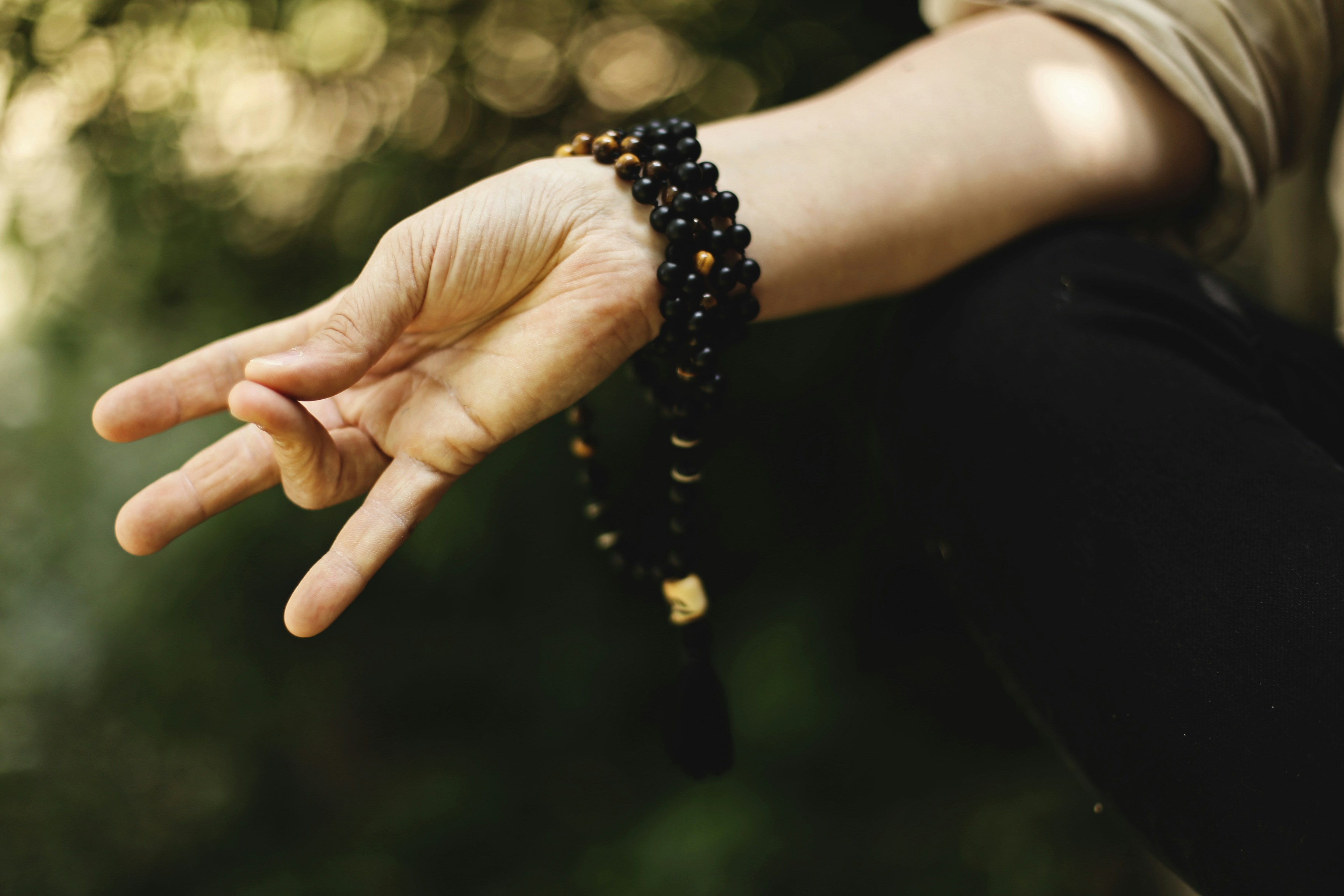
Now, here in India, sitting in a hindu ashram surrounded by rituals that echo the ones I grew up with, I felt myself being pulled back into something deeply familiar. The mantras carried the rhythm of prayers I once knew. The malas resembled tesbih. The circling of the shrine brought back memories of the kaaba. What struck me most was recognition — a bodily remembering of community, ritual, roots, and the power of surrendering to something larger than yourself. It reminded me of the parts I once loved: the comfort of shared practices, familiar rituals, and traditions that are lived together rather than alone.
Doubt started to surface, and I found myself questioning whether my spiritual journey had slowly slipped into a form of modern religion without me noticing. and at the same time, another part of me was undeniably drawn to the energy in the room — to the sincerity of the devotion, to what happens when people give themselves fully to something they believe in.
Watching religion and spirituality overlap so openly here in India has forced my attention inward — asking for honesty about my boundaries and the patience to stay present without clear answers. I didn't expect a spiritual trip to bring me face to face with one of the most unresolved parts of my childhood.
but here we are.
About the Author
Sarah Musić
•
Yoga teacher, writer & former nurse
Recommended from Ulu Yoga

10 min read
•
Jun 17, 2025
Between prayer and presence (pt.2)
What India taught me about the line between religion and spirituality
Sarah Musić
8 min read
•
Jun 17, 2025
Between prayer and presence (pt. 1)
What India taught me about the line between religion and spirituality
Sarah Musić

4 min read
•
Jun 17, 2025
Yoga doesn't just change my body, it changes me
Yoga is often seen as a purely physical practice, but it is truly a bridge to the self. By slowing the breath and staying present, yoga regulates the nervous system, rewires the brain, and profoundly reshapes how we relate to our thoughts, emotions, and the world.
Ece Ozarslan